National Defense Industrial Association (NDIA)
The National Defense Industrial Association (NDIA) is America's leading Defense Industry association promoting national security. NDIA is proud to provide a legal and ethical forum for the exchange of information between Industry and Government on National Security issues. Our members foster the development of the most innovative and superior equipment, training and support for our warfighters and first responders through our divisions, local chapters, affiliated associations and events.
Upcoming National Defense Industrial Association (NDIA) Events
Make plans to join us for the Defense Logistics Agency (DLA) Supply Chain Alliance Symposium & Exhibition June 2-3, 2026, in Columbus, OH. This event is hosted by the National Defense Industrial Association (NDIA) in partnership with the Defense Logistics Agency.
WHY ATTEND
- Gain insight into solutions for issues impacting global supply chains
- Hear from logistics and acquisition professionals on critical issues across the DoD supply chain
- Learn tips on conducting business with DLA representatives
- Network and share ideas with industry and government colleagues
- Establish or strengthen relationships with DLA partners
This conference and exhibition, tailored for small and large businesses, will offer new concepts, insight on Government policy and processing, and will allow for networking, opportunities to share issues, and collective problem solving for a long-term, sustainable supply chain.
No matter if you are a small business looking to begin a working relationship with DLA or an established large business that wants to strengthen the relationship you have already developed, we look forward to your participation at this event. DLA welcomes new businesses that want to join the team and those businesses that have been working with us for years.
Join us and learn more about DLA, and how we can partner together to continually improve Warfighter Support!
The IA-IL Chapter of the National Defense Industrial Association (NDIA) is hosting the 17th Annual Midwest Government Contracting Symposium on June 2nd and 3rd 2026 at Vibrant Arena in Moline, IL to give Defense Contractors working in our region valuable resources and opportunities in this field.
In an era defined by rapid change, global instability, and emerging multidomain threats, readiness can no longer be defined by traditional boundaries. ‘Readiness Without Limits’ emphasizes the urgency to innovate, adapt, and modernize faster than ever before—across technology, logistics, sustainment, manufacturing, cyber, space, and mission command.
This year’s symposium highlights the partnership between government and industry as we work together to build a resilient, future-ready force capable of operating and winning in contested environments. Through collaboration, data-driven decision-making, advanced manufacturing, AI integration, and resilient supply chains, we can deliver the capabilities needed to sustain U.S. overmatch well into the future.
NDIA will sponsor a two-day conference at Vibrant Arena in Moline, IL where we will bring in Defense Experts to examine the recent current events throughout our World and how our Defense Department will sustain and grow the U.S. Industry Base, Supply Chain and Mission Command.
By attending, you will be receiving the latest information on hot topics in government contracting and Army Doctrine, as well as taking advantage of the chance to interact with key government and industry experts. You won’t want to miss this vital networking opportunity!

Small Modular Reactors (SMRs) are transforming how nuclear energy can be deployed, offering factory-built, scalable systems designed for faster implementation, flexible siting, and reliable, carbon-free power.
Join NDIA’s Emerging Technologies Institute (ETI) for a Tech 101 session that provides a clear, policy-relevant overview of SMRs, from design to deployment. This session will explore how SMRs work, the key factors driving cost and schedule, and the licensing, fuel, supply chain, and security considerations that will determine their role in supporting grid resilience, remote operations, and defense energy needs.

The Emerging Technologies Institute and the Good Food Institute are excited to partner on a half-day hybrid event, offering both in-person attendance at the National Defense Industrial Association headquarters in Arlington, VA, and a virtual option for remote participants. This program will explore why and how food biomanufacturing can be leveraged to strengthen U.S. supply chain resilience, agility, and competitiveness.
Programming will cover:
- The threats to our current food system and how food biomanufacturing can provide a safeguard
- The global state of play in biomanufacturing and why food-grade capacity is essential to competitiveness
- Defense-specific use cases for food biomanufacturing
- Policy opportunities to advance the field
The NDIA 2026 Future Force Capabilities Conference & Exhibition is crucial for understanding how new technologies and capabilities will influence future military operations. The conference will provide a platform for collaboration between the defense industry and military organizations to ensure that emerging threats can be addressed.
This world class conference aims to create an innovative environment by bringing together experts from diverse fields such as armaments, robotics, and munitions technology. The objective is to foster creative interdisciplinary conversations and collaborations among the attendees. The agenda is designed to stimulate creative thinking and encourage collaborative problem-solving, ultimately advancing these fields.
Join more than 700 global leaders, defense innovators, and strategic thinkers at a groundbreaking conference exploring the future of warfare. From AI-driven operations and high-level autonomous systems to cyber dominance and next-generation defense technologies, this event dives deep into the forces reshaping conflict in the 21st century.
The intersection of artificial intelligence (AI) and Modeling and Simulation (M&S) has proven to be a critical element in securing our nation’s future. As we face new challenges around the world and within our borders, our nation’s resilience has been a topic of conversation both in Washington, within our Defense community, and across the nation’s businesses and academic institutions. The 2026 Congressional M&S Leadership Summit will bring together thought leaders to explore resilience – what that means for our national defense, for the safety and security of our citizens, for our nation’s healthcare system, and for our critical national infrastructure. This summit will explore this intersection of AI and M&S within the context of national resilience and the role of federal policy, legislation and regulation.
The M&S Leadership Summit is an event sponsored by the National Training and Simulation Association (NTSA) in support of the Modeling and Simulation Congressional Caucus. The purpose of the event is to bring the M&S Community of Practice together to discuss important issues related to M&S, and to try to reach consensus on one or two specific, actionable initiatives for the Congressional M&S Caucus to take for action.
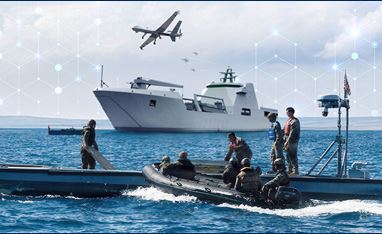
The Expeditionary Warfare Division is the focal point and coordinating element within NDIA for the identification, study and resolution of expeditionary warfare and force protection issues in the littoral regions of the world, affecting the strength of the national defense industrial base and the armed services.
The objectives of the Expeditionary Warfare Division are to:
- Develop and foster industry/Defense Department communications on expeditionary warfare issues, including missions, systems, technologies, training and manpower resources.
- Develop and foster industry understanding of DoD expeditionary warfare capabilities, current and emerging requirements, issues and future plans.
- Develop and foster DoD understanding of expeditionary warfare capabilities, resources and technologies available within industry.
- Develop and foster effective and efficient use of industrial capabilities in meeting DoD current and future requirements.
- Conduct an annual expeditionary warfare conference and other forums, as appropriate, for the exchange of information, ideas and issues of mutual interest to the military services and industry.
- Provide a vehicle for broad-based industrial input to DoD concerns on expeditionary warfare matters.
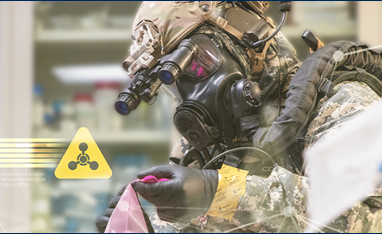
Held annually, TSIS provides industry an opportunity to network and interact with procurement officials for training and simulation products and services from the Army, Navy, Marine Corps, and Air Force. Industry looks for insight on near-term and long-term opportunities, to include Q&A sessions and panel discussions. Acquisition strategies, timing, and funding levels are also provided during the briefs.
Please join us for an Executive Dinner with Mr. Jeremy Bash, Managing Director and Partner with Beacon Global Strategies.
NDIA Washington, D.C. Chapter presents
an Executive Dinner with
Mr. Jeremy Bash, Managing Director and Partner with Beacon Global Strategies
Topic: National Security
on Thursday, June 18, 2026 from 6:00-8:00pm
at The University Club, 1135 16th Street NW, Washington, DC 20036
Mr. Bash has spent the past 20 years advising national leaders and chief executives on a range of strategic, management, legal, and policy issues. His clients include America’s leading companies in the areas of tech, defense, finance, security, and aerospace.
In addition, Mr. Bash is a recognized expert on national security affairs, having served as National Security Analyst for NBC News and MSNBC where his commentary provided analysis on defense issues, intelligence matters, the Middle East, China, Russia, North Korea, U.S. counterterrorism operations, cybersecurity, and current counterintelligence investigations.
He served as Chief of Staff in two national security departments or agencies: first as Chief of Staff to the Director of the CIA (2009-2011) and as Chief of Staff to the Secretary of Defense (2011-2013). As a senior advisor to Leon E. Panetta in both roles, Mr. Bash worked on a number of key initiatives, including the creation of a new defense strategy, formation of two defense budgets, the drawdown of two wars, counterterrorism operations, a new cyber strategy, and a range of sensitive intelligence operations. He traveled with Secretary Panetta to more than 50 countries. From August 2010 to May 2011, he was a member of the CIA’s senior management team overseeing the operation that killed Osama Bin Laden.
At the Pentagon, Mr. Bash managed the Office of the Secretary of Defense, an entity with 2,500 employees and a budget of $4 billion.


NOTE: This event is closed to press/media.

* Please note: This event is closed to the press and non NDIA members
The US Department of Defense (DoD) has expanded their emphasis on the application of systems engineering approaches to ‘missions’. Mission Engineering (ME) is “an interdisciplinary approach and process encompassing the entire technical effort to analyze, design, and integrate current and emerging operational needs and capabilities to achieve desired mission outcomes”. This presentation outlines the current mission engineering methodology, describes how it is currently being applied, and explores the role of T&E in the ME process.
Mission engineering is applying systems engineering to missions – that is, engineering a system of systems, (including organizations, people and technical systems) to provide desired impact on mission or capability outcomes. Traditionally, systems of systems engineering focused on designing systems or systems of systems to achieve specified technical performance. Mission engineering goes one step further to assess whether the system of systems, when deployed in a realistic user environment, achieves the user mission or capability objectives.
Mission engineering applies digital model-based engineering approaches to describe the sets of activities in the form of ‘mission threads’ (or activity models) needed to execute the mission and then adds information on players and systems used to implement these activities in the form of ‘mission engineering threads.’ These digital ‘mission models’ are then implemented in operational simulations to assess how well they achieve user capability objectives. Gaps are identified and models are updated to reflect proposed changes, including reorientation of systems and insertion of new candidate solutions and which are assessed relative to changes in overall mission effectiveness.
As stated in the US DoD Mission Engineering Guide (MEG 2.0), mission engineering uses systems and SoS in an operational mission context to inform stakeholders about building the right things, not just building things right, by guiding capability maturation to address warfighter mission needs.